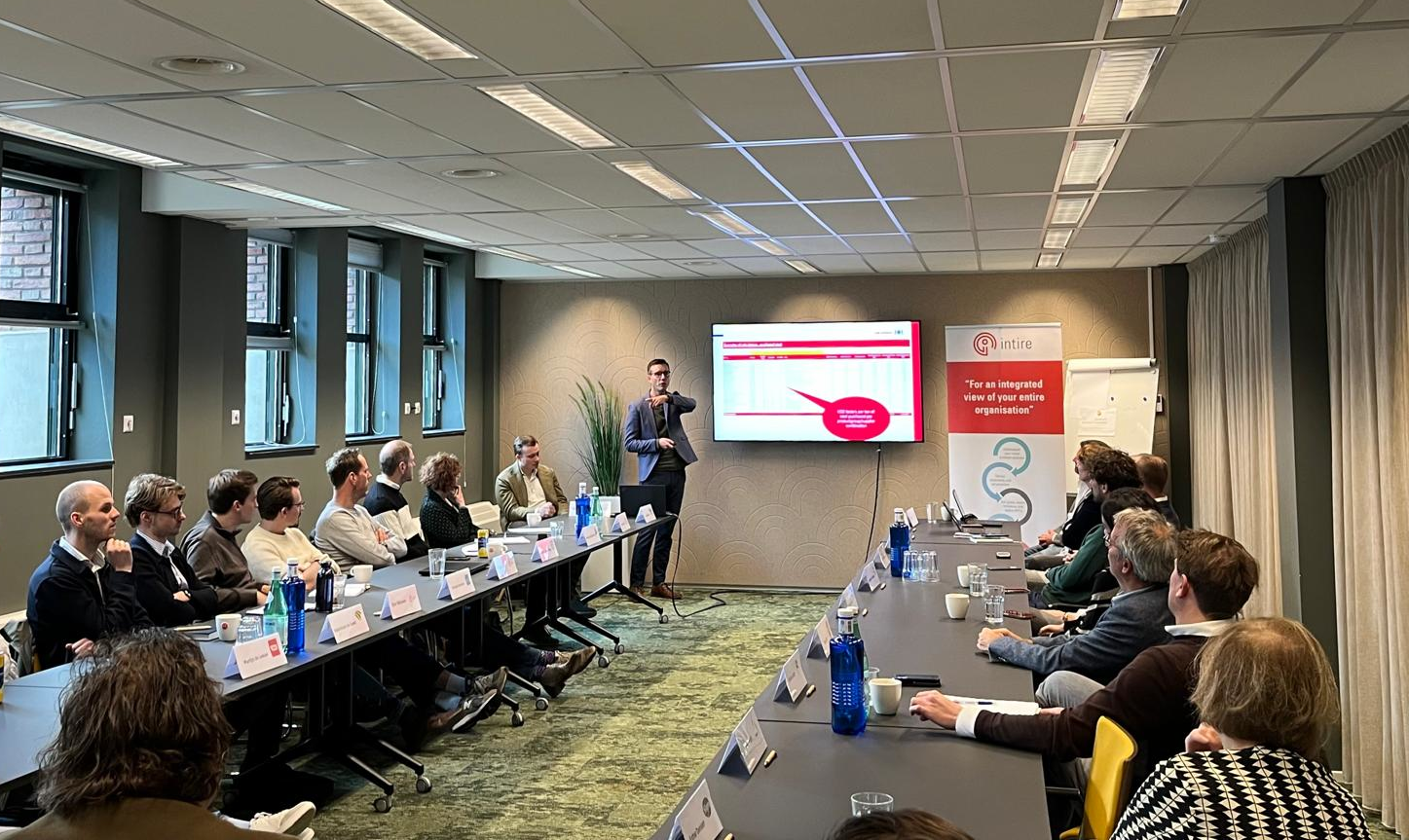
Roundtable – CSRD, Data & Software (May 2025)
Join the fifth edition of our Roundtable on CSRD, Data & Software – Tuesday, May 27
The EU’s Corporate Sustainability Due Diligence Directive (CSDDD) hasn’t even taken effect yet—but the Omnibus proposal is already reshaping it. From a narrowed scope to a delayed start (2028), the rules are shifting. In part 3 of our Omnibus blog series, we explain what’s changing, what it means for your business, and how to prepare with purpose—beyond compliance.

The European Commission’s new Omnibus proposal could delay CSRD reporting obligations by two years and raise the employee threshold to 1,000—drastically changing who needs to report and when. In this 3-part blog series, we break down what’s changing, what it means for your business, and how you can turn uncertainty into opportunity.
Key insights from our roundtable on CO₂ reduction targets: from Science Based Targets to Scope 3 challenges and CSRD integration.
This whitepaper offers a structured approach to help you build a stakeholder engagement plan aligned with CSRD guidelines.
Unlock sustainable growth with the Corporate Sustainability Reporting Directive (CSRD). This EU regulation enhances transparency by requiring businesses to disclose ESG performance, embedding sustainability into strategy. Our blog explores how double materiality analysis, aligned action plans, and stakeholder engagement can future-proof your organization and drive lasting value.
Overcoming the pitfalls of a Double Materiality Assessment (DMA) is crucial in today’s ESG-focused landscape. At Intire, we help companies address common DMA challenges, including interpreting ESG topics accurately, distinguishing impacts, risks, and opportunities, and aligning with ESRS standards to enhance ESG reporting and strategy. Learn how to avoid these key pitfalls and strengthen your sustainability efforts.
Scope 3 emissions are often the elephant in the room — labor-intensive to map, yet essential for achieving meaningful sustainability goals. To discuss this topic, Intire hosted its first Carbon … read more
With the CSRD’s sector-specific reporting standards (ESRS) coming in 2026, companies must report all GHG emissions, including often-overlooked Scope 3 emissions. Scope 3 covers indirect emissions in your value chain, which can account for up to 80% of total emissions, making data collection and analysis complex. Accurate Scope 3 reporting is crucial for compliance and climate change mitigation. Contact us for expert assistance in navigating this intricate process.
123inkt.nl Achieves CSRD Compliance with Intire’s Coaching
123inkt.nl is leading the way in CSRD (Corporate Sustainability Reporting Directive) compliance using Intire’s pragmatic coaching approach. This method helped them perform a double materiality analysis, prepare required reports, and initiate necessary actions. With a focus on sustainable products, operations, and social engagement, 123inkt.nl is committed to sustainability and future market demands.
Reporting according to the CSRD can be quite a complicated task. In this blog we have a look at the three dilemma’s that companies are facing and how we suggest approaching these important decisions.
Our recent roundtable on 11th July 2024 brought together sustainability, finance, and IT professionals to discuss the complexities of CSRD compliance, focusing on effective data collection and software use. Key insights included the need for tailored solutions and the importance of sharing knowledge to ease the transition to sustainable reporting.